|
|
Innovating is something that comes naturally to some people. Some of us have this gift of developing new strategies and technologies, creating art pieces, and so much more! Learn more about cutting-end procedures and innovative projects that we take part in! Think about how we impact the environment, and maybe you'll find useful materials on our website! We all are responsible for taking care of this planet. There are many custom paper options online on this topic. Tons of students have already gotten the best quality essays and papers. Professional writers are talented, hard-working, and diligent professionals that are committed to delivering the best custom papers possible. All papers are completely plagiarism-free and contain no grammatical mistakes or misinformation. Custom papers are a time saver indeed, but they are also really affordable. Buying a custom paper will be a wise decision on your part.
Belgium, September 2010
Many of us are leading transformative initiatives in civil society, business, government, culture and the arts. Across sectors and organisations to improve the well-being and sustainability of our communities, and places of work. Bringing movements for the common good together in new and collaborative ways.
As our initiatives grow and meet new challenges, of complexity, diversity and rapid change, we are challenged to work on many levels simultaneously. We need to cultivate perseverance and resilience – practices for strengthening and deepening, ourselves, our communities, and our movement.
We sense the need to bring together our initiatives, and to share our learnings and questions in the context of a highly engaging training, with diverse participants. We invite you to the Art of Collaborative Leadership, part of the family of Art of Hosting trainings, we create a transformative space for collective learning and practice.
Click here to download the full invitation (pdf)
Click here to register
The Netherlands, 9-11 November 2010
Sustainable Innovation in Complex Systems
As a follow-up to our highly successful training earlier this year in March, Natural Innovation will offer a second U-process training together with Create2Connect in The Netherlands. The course will be offered in Dutch.
For more information please see the full invitation (pdf).
If you are interested in joining an English language U-process training let us know and drop us an email ([email protected]).
Brussels, March 2010
The European Consumer Summit is a multi-stakeholder event in Brussels organised every year by the Health and Consumer Directorate (DG Sanco) of the European Commission. This event used to be, what we would call a ‘classical conference’: with lots of plenary presentations, little opportunities for participants to contribute and networking happening only in the breaks.
The conference was 1.5 days long with ca. 420 participants in total, which were split up in 6 workshops of 35-75 people on topics as diverse as ‘Banking fees: how to ensure transparency and choice?’ to ‘How to improve urban sustainable mobility?’. We were invited host these parallel workshops using the world café method. We designed and facilitated the 6 workshops in collaboration with colleagues form the Art of Hosting network and practitioners from within the European Commission. Each of the workshops had its unique challenging context either through having very polarised stakeholders in the group or being very broad and open. However participants were very enthusiastic about the new approach taken by this more participatory way of working pioneered by the European Commission.
As the regulator of the world’s largest economy, decisions taken by the Commission often have a global impact, improving its engagement with stakeholders is not a minor issue. This was the first time that a more participatory approach was taken in such a large conference with external stakeholders.
Forex Charts free charts for traders.
Read more about this on the World Cafe online community
Netherlands, Jan 2010 – Oct 2010
In 2009 the Dutch government initiated a social dialogue around the future potential and ethical dilemmas around the rapidly developing field of Nano-technology. In collaboration the Nano Technology Platform, Create2Connect and Cordes we are organising a highly interactive multi-stakeholder conference using art, participatory video and the U-process to help participants from the high-school students, technology experts, business and citizens to learn about each other perspective and together co-create possible pathways to the future.
London, since April 2009
If the world lived and ate as we do in the UK, we would need three planets to support us. Tasting the Future is a process to enable business, government, social enterprise and civil society to take practical steps together towards a “one planet” food system. This calls for transformational change, including the way we consume.
Together with Hara Practice Ltd. we are supporting WWF UK to design, convene and host Tasting the Future, a long term systemic change process to shift we way we consume and produce food in the UK. The aim is to build a community of food innovators who will take practical action and use their collective influence to advocate a “one planet” food system. In a series of assemblies over a period of 12-18 months, it will bring together people from business, government, social enterprise and civil society who are willing to change the way we produce and consume food so that what we eat is within the limits of our planet. More info at
http://tastingthefuture.ning.com/
Across Europe, from September 2009 – present
Trough the Hub Brussels, we are one of 8 partners in this EU financed project, together with GEN Europe (Germany), Center for Human Emergence (Holland), Permakultur Institut (Germany), Transition Network (UK), Damanhur (Italy), Findhorn Foundation (UK), Sustainable Projects Ireland (IR).
We are developping a 2-year learning programme to support those people who work in local government, NGOs and the community in the creation of sustainable living environments, both urban and rural.
The two-year long flexible course-design will be interspersed with practical experience that participants gain through setting up their own sustainability projects (Action Learning).
London, since Jan 2008
Together with Reos Partners and WWF-UK and others we put together the foundations for the Finance Lab an initiative designed to take practical action to stimulate transformational change in the financial system so that it serves society and the environment. Over the course of the year we conducted in-depth dialogue interviews with stakeholders and potential allies in the financial system primarily in based in the city of London as well as internationally. We facilitated several multi-day workshops helping WWF making sense of how to initiate change in a rapidly changing financial system and building trust with new partners of the Lab. In March 2010, together with Hara Practice Ltd, we co-facilitated the first Finance Lab Assembly with over 100 participants and we are supporting WWF-UK and the Institute for Chartered Accountants England and Wales (ICAEW) in building the community of finance innovators that can shift the financial system. More about the Lab http://thefinancelab.ning.com/
The Netherlands, 31 March-2 April 2010
Sustainable Innovation in Complex Systems
Together with Create2Connect, Natural Innovation offered a 3 day course in on the practical application of the U-process for sustainable innovation. The course was offered in Dutch. For more information please see the full invite:
U-process training Netherlands full invite (pdf)
Copenhagen, December 2009
During Cop15, the Climate Summit, we were invited by the Asia Europe Foundation ASEF, to facilitate a 2 day meeting for leading Asian and European artists and thought leaders from the cultural sector to collectively understand their role in the Climate Change debate. This gathering was part of the Culture | Futures conference, bringing together 100 artists and leaders of cultural organisations form around the world. The purpose of this meeting was to come up with a vision for the Culture sector’s response to the Climate Change debate and some policy recommendations.
During our remaining days of in Copenhagen we volunteered at the Meshwork during the Klima Forum, the people’s climate summit, joined the Survival Academy and the Inner Climate Learning Village.
|
|
|
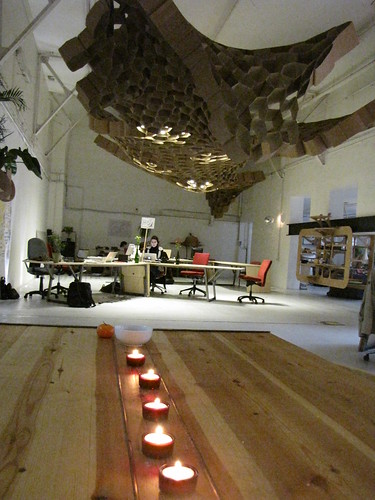 other start-up Hubs in Europe and around the world as advisers, community builders, hosts, facilitators of co-creative meetings, strategists, co-founders and members.


